The Signal
The Masts That Did Not Come Down
When a frequency goes dark, the steel stays. Transmitter infrastructure built for analogue radio has proven far harder to switch off than the signals it once carried.
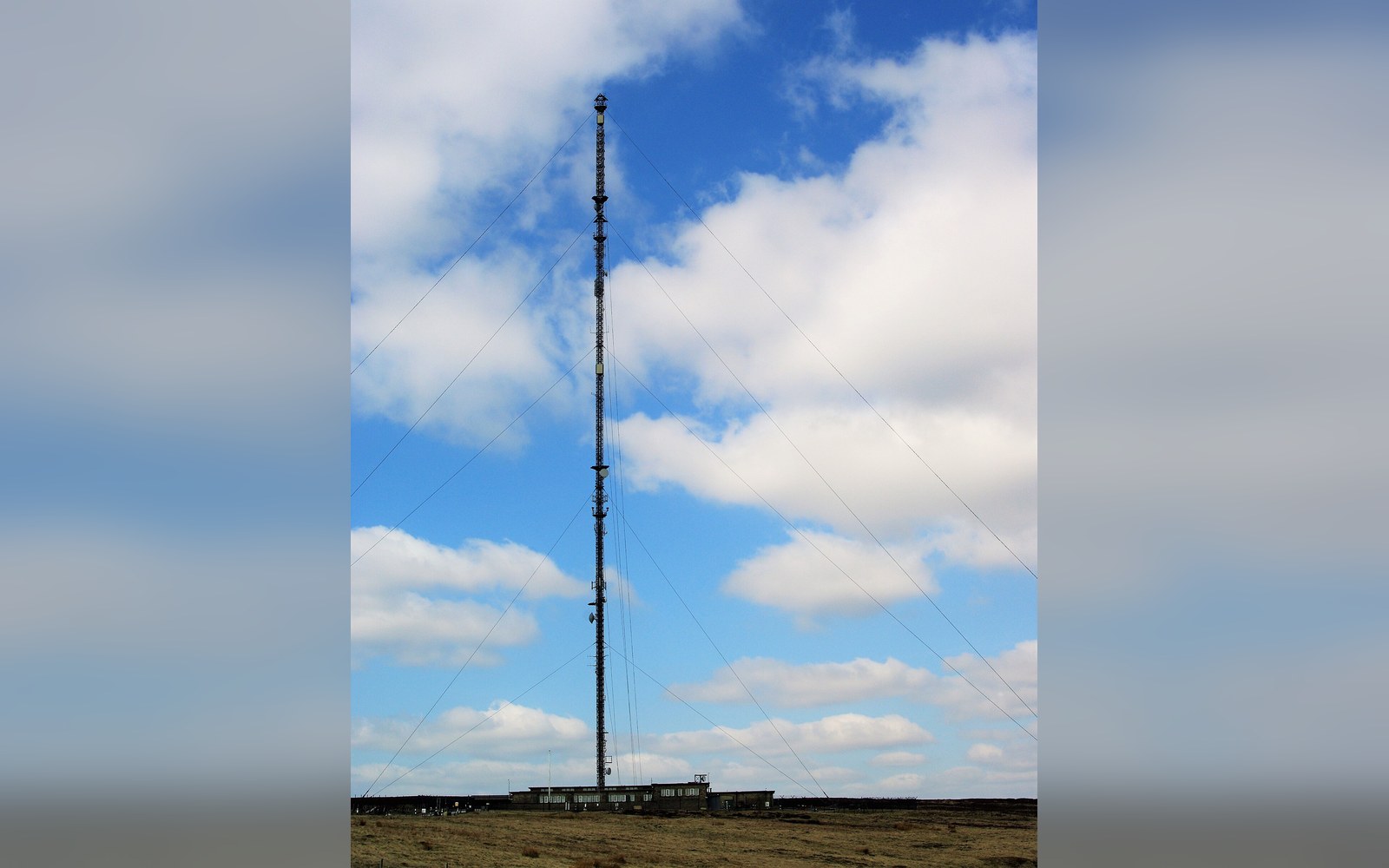
The angle is persistence: the physical infrastructure of analogue radio outlasts the analogue signal it was built for.
Photo: Holme Moss Transmitting Station - geograph.org.uk - 7158875 · Wikimedia CommonsSteel Without a Signal
Shutting off an FM signal takes minutes. Decommissioning the mast that carried it can take years, and in many cases never happens at all. The physical infrastructure of analogue broadcasting — towers, antenna arrays, equipment buildings, cabling — was engineered for decades of service, and the legal, commercial and operational reasons to keep it standing typically outweigh the reasons to take it down.
In the United Kingdom, the dominant infrastructure owner is Arqiva, which holds the contracts to operate most of the country's FM and DAB transmission network on behalf of the BBC, Global, Bauer and other broadcasters. When Norway completed its region-by-region FM shutdown in 2017, the Norwegian conversation prompted renewed attention in Britain to what exactly would happen to Arqiva's estate when — or if — FM finally followed. The answer, set out in successive Ofcom and DCMS consultations, is that no firm shutdown date exists, and the infrastructure question therefore remains hypothetical for the UK. Arqiva continues to maintain both FM and DAB+ transmitter networks simultaneously, because the broadcasters paying for them are required to.
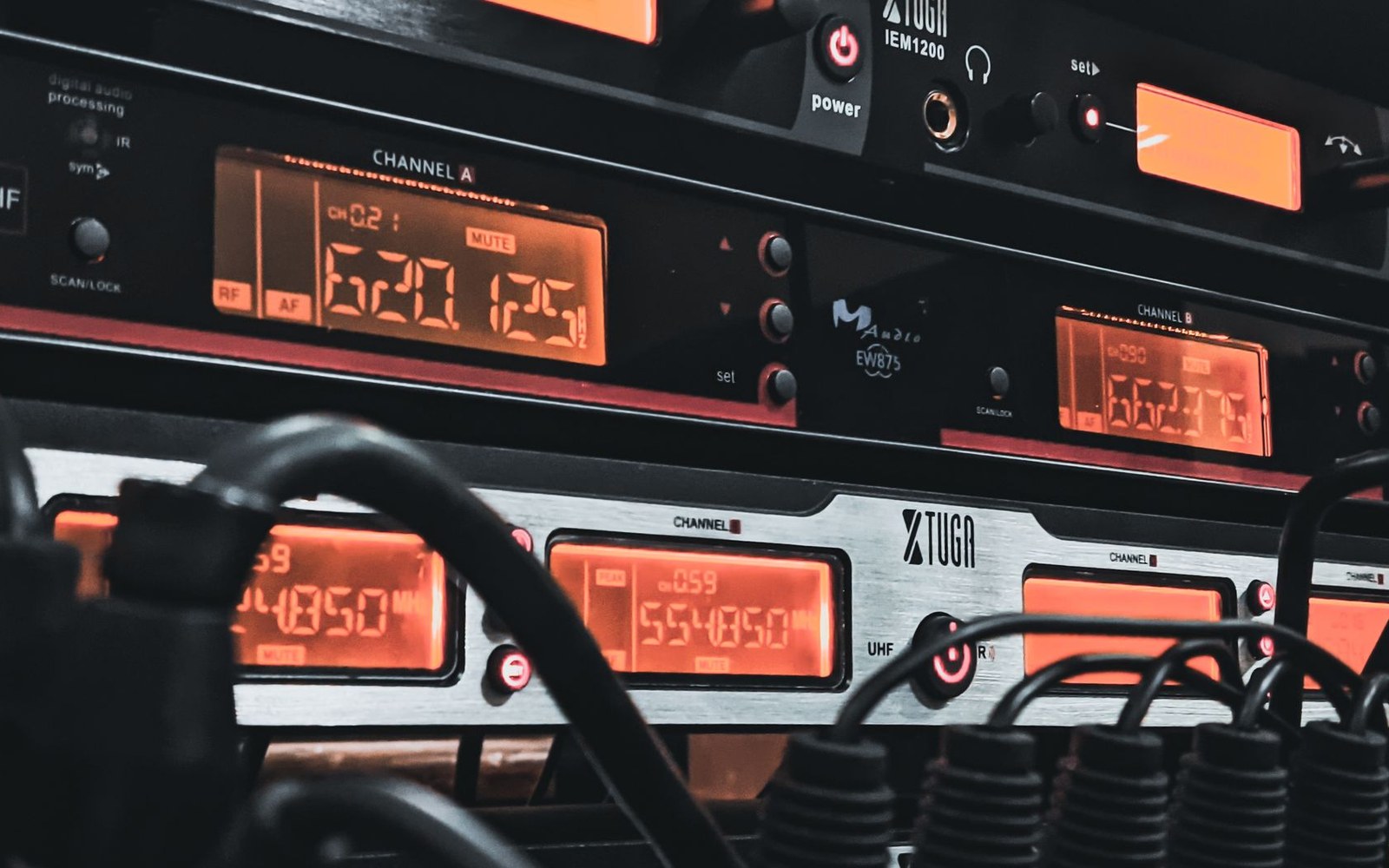
Processing sits between playout and transmission, and it is where loudness policy stops being a document and becomes a setting.
Photo: Busalpa Ernest / PexelsNorway's own experience illustrates the persistence directly. NRK, the public broadcaster, did not simply retire its transmitter sites when FM went dark in 2017. The physical infrastructure was retained — and partly repurposed — for DAB+ distribution, which uses many of the same elevated sites because the propagation physics that made a hilltop good for FM make it equally good for a VHF Band III DAB multiplex. The tower does not care what signal it carries.
Emergency broadcasting adds a harder legal obligation. Several of the sites NRK kept in service after the FM shutdown remain under a state preparedness requirement: in a civil emergency or infrastructure crisis, the ability to broadcast on FM frequencies is treated as a fallback capability. That obligation is written into Norwegian emergency-communications planning and is not something a broadcaster or infrastructure company can simply negotiate away.
The Cost of Standing Still
The economics of keeping a transmitter site operational — even one carrying no commercial signal — are not trivial. Site leases, maintenance contracts, power supply, periodic structural inspection of the mast itself: these costs continue whether the antenna is live or not. For a national network at the scale of Arqiva's UK estate, which spans hundreds of sites from major city rooftops to remote upland towers, the carrying cost of idle infrastructure is a material line in the accounts.
This is partly why the UK's DAB migration timeline has moved repeatedly: the infrastructure question is inseparable from the financial one. Broadcasters paying dual transmission costs — FM and DAB+ simultaneously — have a strong economic incentive to reach a switchover date, but they equally cannot walk away from FM sites until the regulator authorises the shutdown and until any emergency or legal-hold obligations are discharged.
The masts themselves are, in many cases, listed or otherwise protected structures. A tall mast may also carry non-radio payloads: mobile network antennas, microwave links, or emergency-service communications equipment whose operators have their own contracted rights of tenure. Removing a mast requires the agreement of every tenant on it, not just the radio broadcaster who originally justified its construction.
What the Norwegian case and the British standstill share is a single underlying truth: broadcasting infrastructure is civil engineering first and radio technology second. It is built to last, sited on land with long lease terms, often on elevated ground of ecological or planning sensitivity, and interwoven with other users' legitimate interests. The signal can be switched off in a control room. The tower that sent it into the air will almost certainly still be there when the next technology cycle begins.
More in The Signal