The Switchovers
One Region at a Time: How Norway Turned Off FM in 2017
The world's first national FM switch-off was not a single event. It was eleven separate cutovers, one geography at a time, completed across an entire calendar year.

The angle is operational: how a single master-control room at Marienlyst managed a sequenced shutdown across the country's geography.
Photo: Skylar Kang / PexelsThe Decision Behind the Schedule
Norway's government announced the FM shutdown date in 2015, after years of preparation that had already made DAB+ coverage and listening share the dominant metrics in the policy debate. The Ministry of Culture set two formal thresholds before any region could be cut: national DAB coverage reaching at least 90 per cent of the population, and DAB+ receivers present in a meaningful share of Norwegian households. By late 2016, both conditions were judged met. The cutover timetable was handed to NRK — Norsk rikskringkasting, the public broadcaster — and to the commercial network P4 and Radio Norge, whose national licences ran on the same multiplex infrastructure.
The schedule that emerged was deliberately sequential rather than simultaneous. Norway's topography made a single national switch impractical: the country's fjords, mountains and scattered coastal communities had required decades of FM relay investment, and the same physical complexity now demanded that engineers confirm DAB reception quality region by region before pulling the analogue signal. A single-day national cutover would have left no margin for troubleshooting. A phased approach gave time to identify and address reception gaps before they compounded across the whole country.
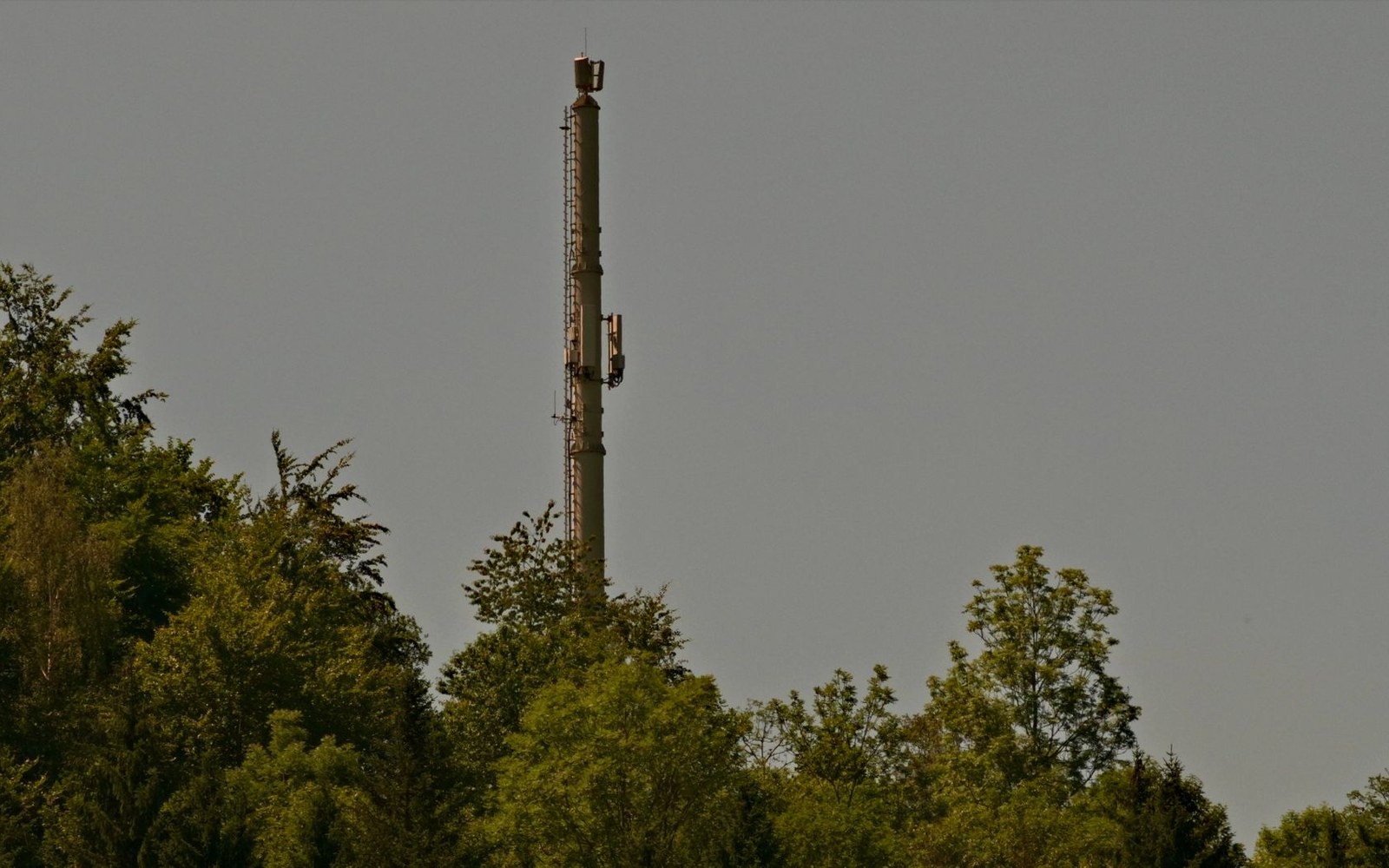
A lattice mast is a shared structure. Ending one transmission on it does not release the site or the obligations attached to it.
Photo: Patrick / PexelsEleven Regions, Eleven Cutovers
The first FM signals went off on 11 January 2017 in Nordland, the long northern county that runs from below the Arctic Circle to the Lofoten archipelago. It was chosen first partly because its geography was the most challenging and partly because a winter cutover in a sparsely populated region would create fewer complaints than one centred on Oslo. NRK's technical teams confirmed DAB+ coverage along the E6 highway corridor and in the coastal ferry routes before the switch was thrown.
The remaining regions followed at roughly monthly intervals through the year. Troms and Finnmark — Norway's two northernmost counties, pushed up against the Russian and Finnish borders — were cut in February and March respectively. Each cutover was preceded by a public information campaign specific to that region, and NRK ran a dedicated telephone helpline staffed with advice on DAB+ receiver upgrades for households and car radios that had not yet made the transition.
Chronology
The Switchovers
- January 2017
- Nordland becomes the first Norwegian region to lose FM
- February–March 2017
- Troms and Finnmark cutovers
- April 2017
- Oslo and Akershus region FM shutdown
- Spring–autumn 2017
- Western and central regions (Møre og Romsdal, Trøndelag, Rogaland, Hordaland, Sogn og Fjordane)
- December 2017
- Final regional cutovers; national FM shutdown complete
Technical terms
The Switchovers
- DAB+
- Digital Audio Broadcasting Plus; the European digital radio standard using HE-AAC v2 audio encoding, transmitted in multiplexes
- Multiplex
- a single DAB broadcast channel bundling several stations' streams for transmission
- Gap-filler
- a small repeater that rebroadcasts a DAB+ multiplex signal into a localised coverage shadow
- IBOC / HD Radio
- the US alternative approach; unlike Norway, no switch-off date has been set
The southern and western regions with higher population densities came later in the year, giving households more lead time and allowing the government to absorb feedback from the north. Møre og Romsdal and Trøndelag were cut in the spring. The Oslo and Akershus region — the capital and its surrounding county, containing the largest single concentration of listeners — switched off in April. Rogaland, Hordaland and Sogn og Fjordane in the west followed through the summer and early autumn. The final regional cutover, covering the remaining southern counties, was completed in December 2017.
Each confirmed cutover date was announced weeks ahead, and NRK published the status of every regional FM transmitter on its website.
Marienlyst and the Master-Control Logic
The technical coordination of the shutdown ran through NRK's headquarters at Marienlyst in Oslo. The master-control room at Marienlyst had long served as the nerve centre for NRK's national transmission infrastructure, routing programme feeds to the network of transmitters managed by the national transmission company Norkring (subsequently part of Telenor's infrastructure division and later separated). From Marienlyst, engineers could monitor the operational status of both the legacy FM transmitter network and the DAB+ multiplex simultaneously, and could confirm signal continuity on DAB+ before authorising each regional FM shutdown.
The process for each region followed a consistent protocol. In the weeks before a scheduled cutover, Norkring crews conducted on-site verification of DAB+ signal levels at locations known to have marginal FM reception — mountain valleys, tunnel approaches, islands served by directional FM relays. Where DAB+ coverage was found to fall below the agreed threshold, gap-fillers — small repeater transmitters that rebroadcast the DAB+ multiplex signal locally — were installed. NRK's own coverage team published updated coverage maps as each region cleared its verification stage.
On the cutover day itself, FM transmitters were shut down county by county rather than all at once within a region, allowing the Marienlyst control team to confirm that listener complaint volumes and helpline traffic remained within expected ranges before proceeding to the next transmitter cluster. The helpline data served as a real-time proxy for undetected coverage problems: a spike in calls from a particular postcode would trigger a rapid check of the DAB+ signal in that area.
What the Numbers Showed and What They Did Not
By the time the final regional FM signals went dark in December 2017, Norwegian digital radio listening figures showed DAB+ as the clear primary platform for domestic broadcast radio consumption. DAB+ listening share among Norwegian radio listeners had exceeded FM for the first time in 2015, and the shutdown reinforced rather than created that market structure.
The disruption rate — measured by helpline calls and consumer complaints filed with the regulator — was lower than critics had predicted. Pre-shutdown surveys conducted by Edison Research and Norwegian industry bodies had suggested that car-radio transition was the single largest source of listener friction, since a significant share of Norwegian vehicle fleets still carried FM-only head units in 2017. Portable DAB+ adapters and car dashboard adapters sold at volumes that cleared retail stock in some northern regions ahead of the Nordland cutover. Some FM signals from Swedish stations remained audible in border areas and on certain frequencies, creating a partial analogue residual that NRK's communications did not treat as a problem, since those were foreign transmissions outside Norwegian licensing jurisdiction.
The 2017 shutdown was not without political friction. The Norwegian Consumer Council raised concerns in 2016 about the readiness of the car-radio market, and a parliamentary minority sought a delay. The government held the schedule. In retrospect, the region-by-region execution — with its built-in feedback loops and the Marienlyst control architecture — appears to have been the operational factor that made the political commitment credible. Regulators in the United Kingdom cited the Norwegian experience when assessing their own FM switch-off timetable, noting both what the sequenced approach achieved and the consumer-communications investment that accompanied it.
Norway's 2017 switch-off was the first completed national FM shutdown by a sovereign state. The operational template — phased regional cutovers, verified coverage before each switch, a centralised technical coordination point, and a consumer-facing information infrastructure running alongside the technical one — has been studied by broadcast regulators in Switzerland, Germany and Denmark as each has moved, at varying speeds, toward its own analogue exit.
More in The Switchovers