The Signal
The Loudness War Reaches a Regulator: R 128 and How Normalisation Changed Radio
A technical standard did what thirty years of engineering complaints could not: it made being louder than your competitor pointless.
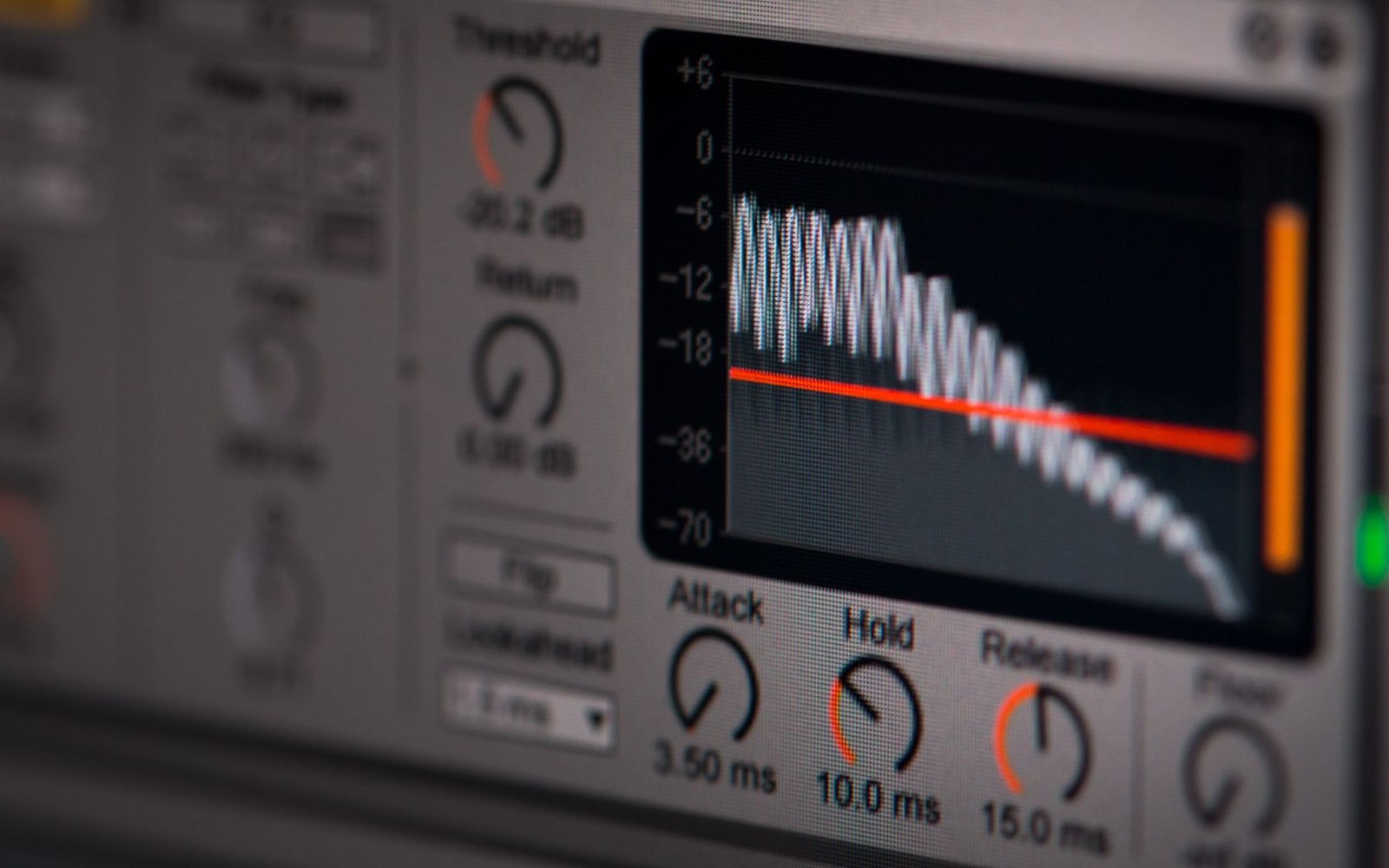
The angle is resolution: a technical standard settled an arms race that engineers had complained about for thirty years.
Photo: Torsten Dettlaff / PexelsThe Arms Race That Preceded the Fix
The loudness war on radio predates the streaming era by decades. From the moment programme directors understood that a louder station seemed more present on a car radio's seek function, the incentive was clear: push harder. Audio processors — Orban Optimods, Omnia units, and their competitors — were tuned not just for clarity but for maximum perceived loudness within the constraints of the modulation envelope. Engineers documented the distortion, the crushed dynamics, the listening fatigue. Regulators noticed. Almost nothing changed, because no individual broadcaster could afford to sound quieter than the one on the next frequency.
The structural problem was a collective-action failure. Every station knew that restraint, taken unilaterally, was a competitive loss. What the industry needed was a common ceiling that applied to everyone simultaneously — and applied at the point of consumption, not at the point of transmission.
A lattice mast is a shared structure. Ending one transmission on it does not release the site or the obligations attached to it.
Photo: Patrick / PexelsWhat R 128 Actually Says
The European Broadcasting Union published EBU R 128 in 2010, with its companion measurement specification EBU Tech 3341 following to define the metering implementation precisely. The standard specifies a target integrated loudness of −23 LUFS (Loudness Units relative to Full Scale), a maximum true-peak level of −1 dBTP, and defines the LU scale so that 1 LU equals 1 dB of loudness difference. It also introduced the concept of the loudness range (LRA), a descriptor of the dynamic spread of a programme that gave engineers a common language for dynamic variation rather than peak levels alone.
The unit LUFS — and its synonymous variant LKFS, used in the ITU-R BS.1770 standard on which R 128 is partly based — measures perceived loudness over time using a specific K-weighted filter that approximates the frequency sensitivity of human hearing. That distinction matters: unlike peak metering, which catches transients, integrated loudness measurement captures what a listener actually experiences across a programme. Mixing to −23 LUFS does not make content quiet; it makes it consistently placed relative to other content normalised to the same target.
EBU member broadcasters — including the BBC, NRK, Sveriges Radio, and most major European public-service networks — adopted R 128 progressively from around 2012 onward. The BBC published its own loudness compliance guidance aligned to the standard. NRK, whose headquarters sit at Marienlyst in Oslo, was among the early implementers, embedding R 128 compliance into playout workflows for both terrestrial and digital services.
What Changed at the Transmitter, and What Did Not
The practical effect on radio processing was significant but not immediate. Broadcast chains that had been optimised for maximum loudness required reconfiguration. Processors set to slam audio against the modulation ceiling were retuned; loudness meters replaced or supplemented peak meters in playout systems. For DAB+ services, where there is no analogue modulation ceiling to exploit in the same way, the rationale for aggressive peak limiting was further reduced — DAB+ transmits a coded bitstream, and the HE-AAC codec introduces its own artefacts when pre-processed audio is pushed too hard before encoding.
The competitive pressure did not vanish entirely. FM broadcasters in markets without regulatory enforcement of R 128 retained the technical freedom to process aggressively, and some did. The standard is a recommendation, not a law, and the EBU has no enforcement jurisdiction over commercial stations that are not its members. What R 128 changed most decisively was the streaming and digital-broadcast environment: platforms and public-service networks that adopted it removed the loudness differential that had made the arms race rational in the first place.
The longer consequence is structural. When a listener moves between a normalised stream and a non-normalised one, the non-normalised source does not sound more authoritative — it sounds congested. That perceptual shift, multiplied across millions of listening sessions on smart speakers, DAB+ receivers, and streaming apps, gradually reframes what "good" sounds like. The regulator did not win the loudness war by issuing a fine. It won by changing what the listener hears as the default, and making loudness compression a liability rather than an asset.
More in The Signal