Listening
NTS and Worldwide FM: Internet-Native Radio's Operating Logic
Born on the stream, not adapted to it — two London stations that never had a frequency to lose.

The angle is format: what a schedule looks like when there is no spectrum constraint.
Photo: Anna Pou / PexelsFormat Without Frequency
NTS Radio launched in London in 2011 from a room above a shop in Dalston. Worldwide FM followed in 2016. Neither station has ever held a broadcast licence, applied for a transmitter allocation, or worried about spectrum. That founding condition shapes everything downstream: the schedule, the archive policy, the licensing posture, and the implicit contract with the listener.
Legacy commercial and public broadcasters arriving on streaming — iHeartMedia, Bauer Media, the BBC — carry the logic of their analogue origin. Formats are clock-built, segments are timed to the quarter-hour, and programming is designed around a listener who may tune in mid-flow. The architecture assumes scarcity: one frequency, one simultaneous programme, the same content delivered to every receiver in range.
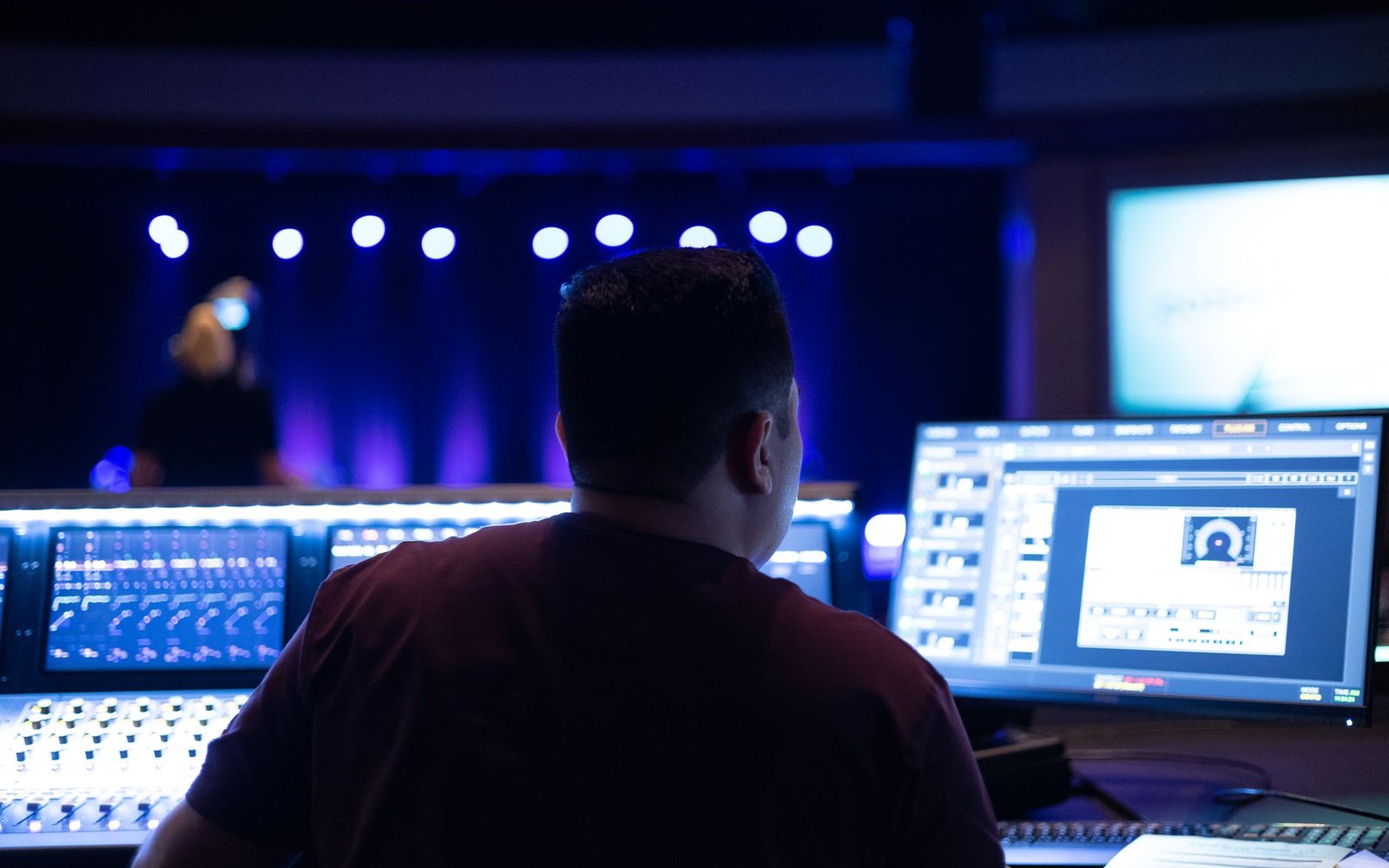
Master control is where a switch-off is executed: programme feeds, transmitter status and helpline traffic are read from one desk.
Photo: Caleb Oquendo / PexelsNTS runs two permanent channels and a rotating roster of guest slots, with no fixed format clock. Worldwide FM operates as a single channel with a loose schedule that foregrounds individual curators rather than dayparts. Both treat the stream not as a broadcast signal converted to IP packets but as the native medium — which means they optimise for listening with the interface, not despite it. On-demand replay of past shows is a core part of the proposition, not an afterthought bolted onto a live service.
That archive function creates a licensing distinction that matters. When a recorded show sits in a replay library, it shifts from a live webcast (subject to one rate structure under Copyright Royalty Board determinations in the US) to an on-demand transmission — which SoundExchange tracks as a separate use category with its own per-performance obligations. UK stations pay across two frameworks simultaneously: PPL for the phonographic right and PRS for Music for the performing right, with streaming subject to the same dual-payment logic as over-the-air play. For a station with no advertising revenue and a deep replay catalogue, those per-stream costs scale against a very different income model than a commercial FM group can sustain.
Both stations resolve this partly through listener support and partly through brand partnerships that stop short of conventional spot advertising. The model is legible: keep overheads low, pay the rights bodies, and treat the schedule as a curatorial document rather than a vehicle for sold airtime. Neither station publishes RAJAR-audited figures, because neither is required to.
What they demonstrate is less a business model than a grammar. When spectrum is not the constraint, a schedule can reflect taste, not just reach — and the resulting format is genuinely distinct from what legacy broadcasters produce when they migrate the same clock-built output to an IP stream.
More in Listening