Listening
The Dashboard Is the Real Battleground
The car screen has become radio's most contested real estate — and the companies that built it are not broadcasters.
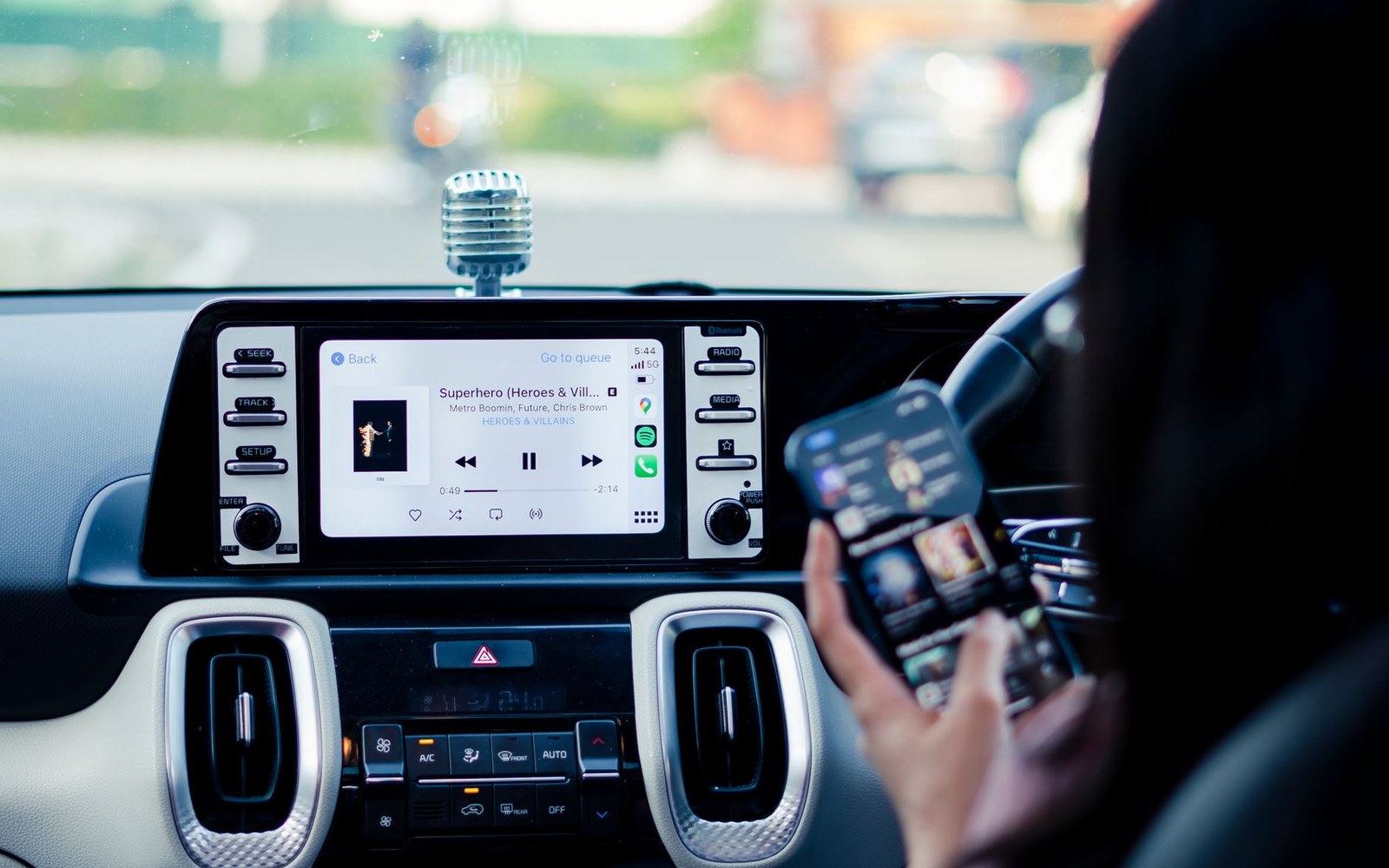
The angle is displacement: the platform that controls the car screen controls the morning commute.
Photo: Viralyft / PexelsWho Owns the Interface
For most of the twentieth century, the car radio was a fixed receiver bolted behind a fascia, tuned by hand, and largely indifferent to the identity of whoever made the vehicle. That relationship has inverted. Android Auto and Apple CarPlay now mediate the relationship between driver and audio in a growing proportion of new cars, and neither platform was designed with broadcast radio as the primary use case.
The numbers bear this out. Edison Research's Infinite Dial series — the most cited annual survey of American audio consumption — has tracked a steady decline in AM/FM's share of in-car listening even as overall time in the car remained largely stable through the mid-2020s. Broadcast radio still leads, but the margin over streaming and podcast consumption has narrowed every year the survey has run. In the United Kingdom, Ofcom's annual Media Use and Attitudes report and the quarterly RAJAR data tell a comparable story: DAB+ and FM together remain dominant in vehicles, but smartphone-mirrored audio is rising fastest among younger commuters — exactly the cohort whose in-car habits will define the medium's next decade.
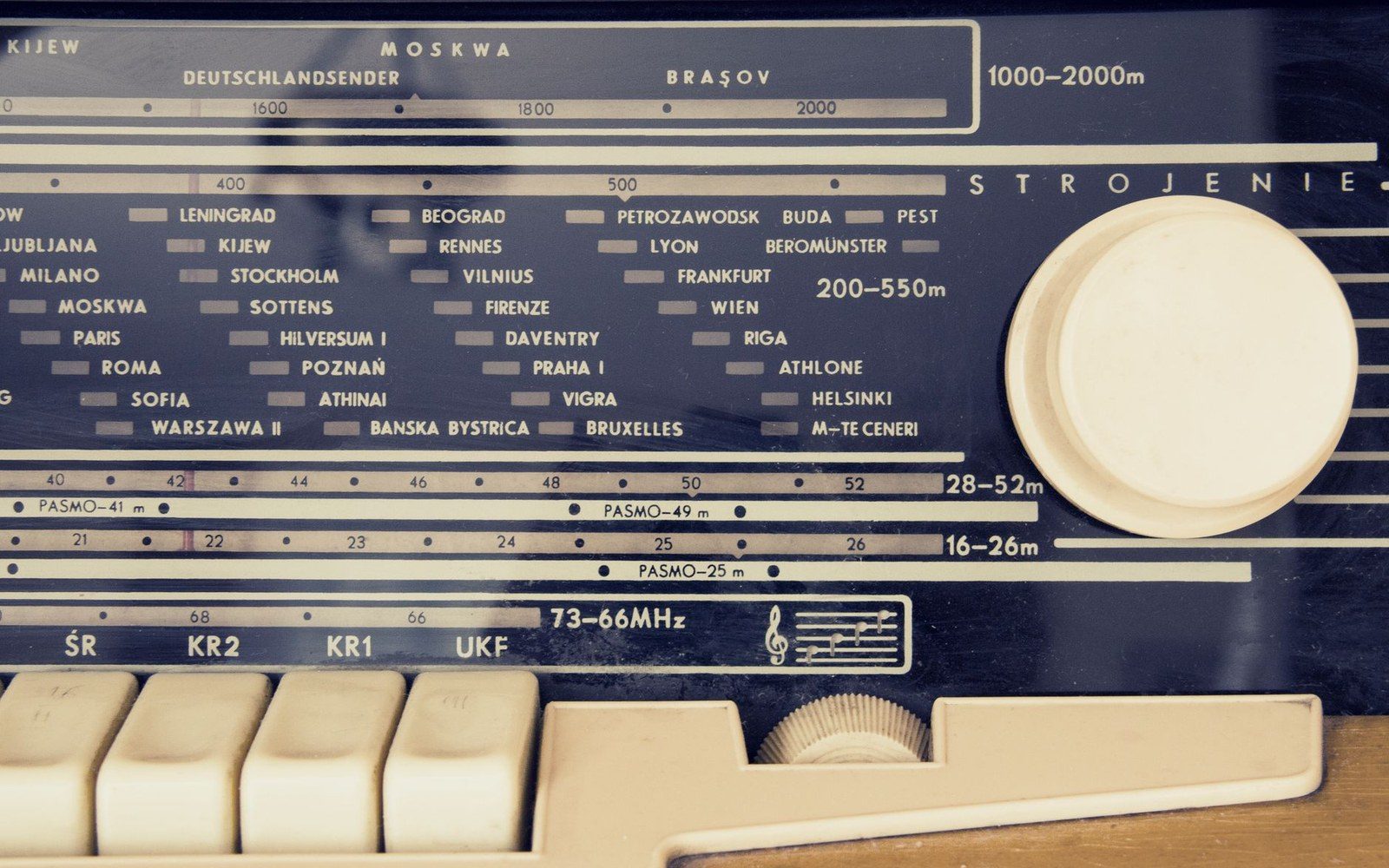
Domestic receivers are counted rather than surveyed: the receiver market is the published evidence regulators use for uptake.
Photo: Breakingpic / PexelsThe mechanism is platform mirroring. CarPlay and Android Auto do not replace the car's receiver; they overlay its screen with a smartphone-sourced interface. A driver using either system reaches TuneIn, Spotify, Apple Music or a podcast app before they reach a broadcast tuner — because the tuner is one icon among many, carrying no visual priority. The broadcast industry spent decades assuming the dashboard belonged to it. It no longer does by default.
The DAB+ Problem in the Car
Europe's transition to DAB+ has always treated the car as the critical last environment to convert. In-home listening can be migrated through a digital set-top box or a new tabletop receiver; the commute cannot be moved by consumer choice alone, because the hardware is fixed at point of manufacture. That is why Germany's Telekommunikationsgesetz mandated DAB+ reception in all new passenger vehicles from December 2020, following an analogous obligation in Norway and, later, the United Kingdom.
The displacement chain
Listening
- Edison Research Infinite Dial
- annual survey tracking AM/FM vs. streaming vs. podcast share in-car; cited as primary US consumption data
- RAJAR
- UK quarterly listening figures; DAB+ and FM together still lead in-car but smartphone-routed audio rising among under-35s
- CarPlay / Android Auto
- smartphone-mirroring platforms that overlay the car's native screen, relegating the broadcast tuner to one option among many
- DAB+ receiver mandates (Germany, Norway, UK)
- require the chip to be present in new vehicles; do not govern which interface the driver opens
- HD Radio (iBiquity)
- US in-band on-channel standard; chipsets in new US cars but accessed through tuner, not CarPlay/Android Auto app menus
The royalty asymmetry
Listening
- exempt from US sound-recording performance royalties under the terrestrial-radio exemption
- same audio, but triggers SoundExchange royalty obligations set by the Copyright Royalty Board
- Consequence: platform migration from tuner to app increases per-session royalty cost for the broadcaster, at the moment when the platform is pushing listeners toward apps
The mandate guarantees DAB+ is present in the dashboard. It does not guarantee the driver uses it. When CarPlay or Android Auto is the primary interface, the broadcast tuner — including the mandated DAB+ chip — sits behind an extra navigation step. The receiver still receives; the signal still arrives. But the listener's default is the app layer, not the broadcast layer. The consequence is that carriage mandates address hardware penetration without addressing interface visibility, and those are different problems.
The UK situation is illustrative. Ofcom's Connected Nations reports track DAB+ availability and device penetration but cannot directly measure which in-car audio source a driver actually selects session by session. RAJAR measures what people report listening to, not the channel through which they accessed it. That methodological gap — between what hardware exists and what interface is opened — is where broadcasters are losing ground without the data to fully quantify it.
HD Radio and the American Asymmetry
In the United States, HD Radio — the in-band on-channel digital standard licensed by iBiquity Digital Corporation — occupies an even more precarious position. HD Radio chipsets are present in tens of millions of vehicles and are installed as standard in a large share of new American cars, but the terrestrial-radio exemption that shields over-the-air broadcasters from sound-recording performance royalties does not extend to the streaming versions of those same stations. When a driver routes through Android Auto to iHeartMedia's app rather than tuning the FM band directly, the station's streaming feed triggers royalty obligations that the broadcast signal does not. The platform switch carries a cost.
That asymmetry matters structurally. Large broadcast groups including iHeartMedia and Audacy have built substantial app and streaming infrastructure, partly to remain visible in the CarPlay and Android Auto menus. The build-out is expensive. For smaller stations and community broadcasters, maintaining a polished app presence — the prerequisite for dashboard visibility in the platform layer — is a significant resource burden that the original over-the-air licensing framework never anticipated.
That methodological gap — between what hardware exists and what interface is opened — is where broadcasters are losing ground without the data to fully quantify it.
Who Controls the Menu
The car is not the only arena, but it is the most commercially significant one. Industry researchers have consistently found that morning drive-time — the window between roughly six and nine in the morning — produces the highest broadcast radio reach of any daypart. It is the session advertisers pay the most to reach, and it is the session most at risk of being redirected by the platform interface.
Apple and Google set the rules for CarPlay and Android Auto, including which apps are permitted, how they are categorised, and how they appear on screen. Neither company is a broadcaster or a licensed carrier. Their revenue models are not based on audio performance royalties, transmitter networks, or spectrum licences. The automotive manufacturers integrate CarPlay and Android Auto under commercial agreements whose terms are not public, but the direction of travel is visible: nearly every major vehicle brand has committed to deeper integration, with some moving toward fully embedded versions that do not require a connected phone at all.
For broadcast radio — whether FM, DAB+, or HD Radio — the competitive challenge is not technological obsolescence. The transmitter networks are largely intact; the signals reach the car. The challenge is a layer up from the signal: it is the menu order on a touchscreen, the default-open app, the voice-command routing. A driver who tells a vehicle assistant to play a named station may reach its broadcast signal or its stream depending on how the platform resolves the request. That ambiguity, invisible to the listener, determines whether the session registers as a broadcast impression or a streaming play — and whether it carries performance-royalty obligations.
The broadcast industry's response has been partly regulatory — lobbying for carriage obligations and interface-prominence rules — and partly commercial, building the app presence that the platform environment requires. Neither approach fully resolves the underlying tension: the companies that now own the car screen were not party to the spectrum allocations, multiplex agreements, or licensing frameworks that defined broadcast radio's infrastructure. They built a different infrastructure, and the morning commute increasingly runs on theirs.
More in Listening