Listening
BBC Sounds and Sveriges Radio: What a Public-Broadcaster App Has to Do
Public-broadcaster apps are not just delivery pipes. They carry legal mandates that no commercial streaming service faces.
The angle is mandate: public-broadcaster apps carry legal obligations that commercial apps do not.
Photo: BBC Sounds logo · Wikimedia CommonsTwo Apps, One Principle
BBC Sounds and Sveriges Radio Play (SR Play) look, at first glance, like any other audio app: live streams, on-demand archive, algorithmic recommendations. The difference lies in what the organisations behind them are required to do rather than what they choose to do.
The BBC's royal charter and the accompanying framework agreement with DCMS set out the corporation's public purposes explicitly. BBC Sounds is the primary means by which those purposes now reach listeners under 35, which means the app is not optional infrastructure — it is the interface through which the BBC discharges obligations around impartiality, universal availability, and emergency information. The BBC's annual reports to DCMS consistently list Sounds audience metrics as a core accountability measure, not a commercial KPI.
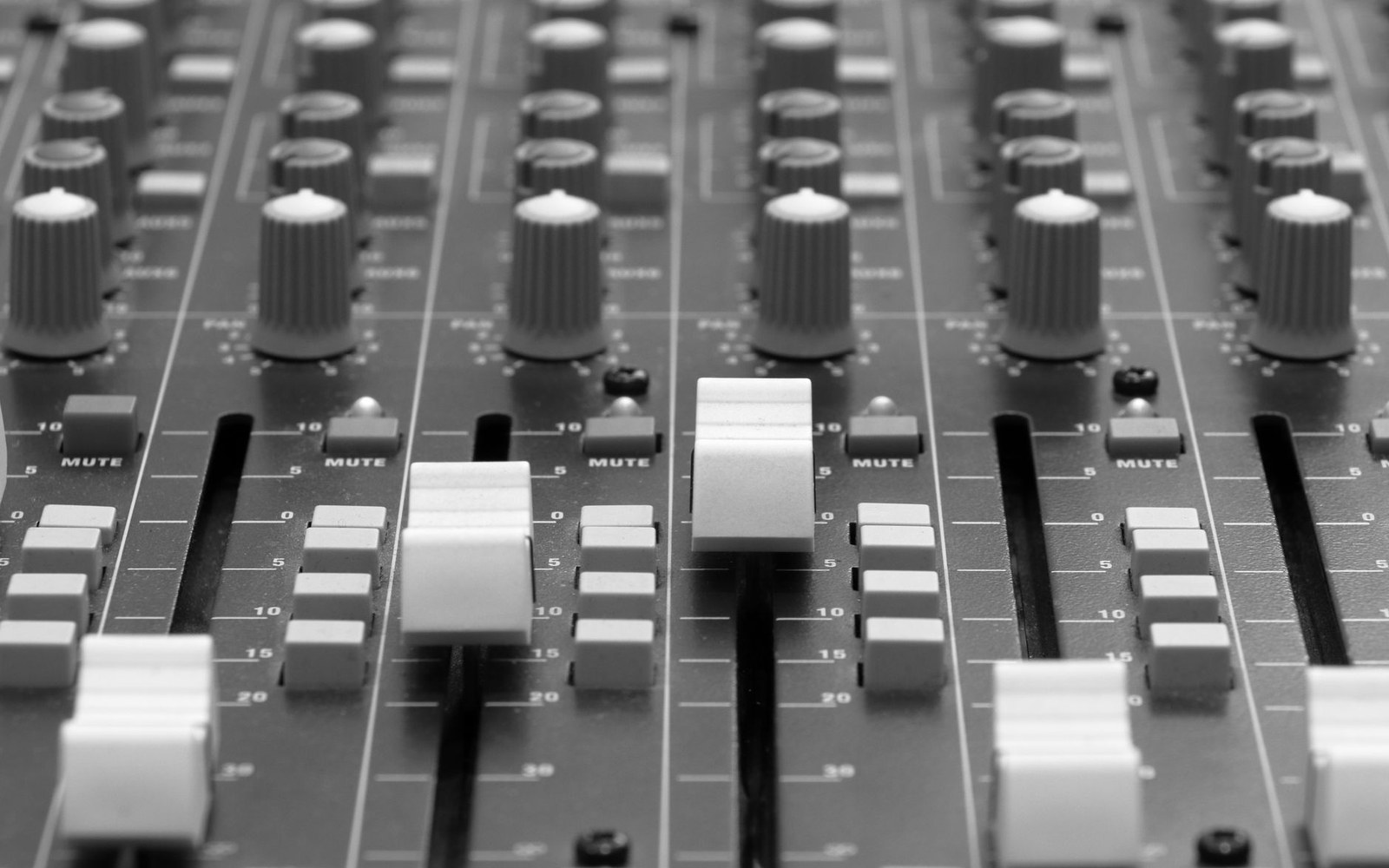
Every channel strip is a gain stage. What leaves the desk is already the product of decisions taken before any transmission standard applies.
Photo: Scott Platt / PexelsSveriges Radio operates under a public-service broadcasting agreement renewed by the Swedish government, with compliance reviewed by Sweden's independent broadcasting regulators. SR Play carries equivalent obligations. Sweden's framework requires that Sveriges Radio be universally accessible and that its content remain free of advertising — conditions that SR Play inherits in full. The app cannot carry pre-roll advertising, cannot gate content behind a subscription, and must remain available on all major platforms without commercial arrangement.
Rights, Archives, and the Catch-Up Window
Both apps sit at the intersection of live broadcasting and on-demand archive, and the rights picture for each differs sharply from a commercial streamer. A platform such as Spotify licenses recordings directly; a public-broadcaster app must work within rights agreements originally negotiated for broadcast, then extended — often expensively — for on-demand availability.
The legal architecture
Listening
- BBC Sounds
- governed by BBC Royal Charter and DCMS Framework Agreement; annual reports to DCMS cite Sounds metrics as public-purpose accountability data
- SR Play
- governed by Sveriges Radio's public-service agreement, administered by PTS (Swedish Post and Telecom Authority); no advertising, no subscription gates
- Emergency carriage (BBC)
- Ofcom emergency communications obligations for public service broadcasters
- Emergency carriage (SR)
- VMA (Viktigt Meddelande till Allmänheten), Sweden's statutory public-alert system
Rights constraints by type
Listening
- Music rights
- PRS for Music and PPL (BBC); collective rights body agreements (SR); both negotiated originally for broadcast, extended for on-demand
- Catch-up window
- BBC Sounds content typically expires at 30 days; a rights-clearance ceiling, not a product choice
- Archive replay
- SR Play may offer some content as live-linear replay only, triggering a different licensing tier than true on-demand
The BBC's rights clearances for catch-up content on Sounds are governed by agreements with PRS for Music and PPL for music, and by separate talent and contributor contracts for speech content. Drama, comedy, and documentary programming frequently drops off the platform after thirty days — not because of a design decision but because the on-demand window negotiated with rights holders has closed. This is structurally different from a commercial streamer that licenses content for an indefinite term.
SR Play operates under comparable constraints. Swedish copyright law and the agreements between Sveriges Radio and collective rights bodies mean that some archive content is available only as a live-linear replay rather than a true on-demand stream — a technical distinction that determines which licensing tier applies.
The Emergency Broadcast Requirement
The most distinctive obligation that neither commercial app shares is emergency broadcast carriage. Under Sweden's framework agreement, SR Play must be capable of carrying critical public announcements — the digital equivalent of the legacy VHF requirement that Sveriges Radio reach every household in a crisis. The system is integrated with Sweden's Viktigt Meddelande till Allmänheten (VMA) — Important Message to the Public — alert infrastructure.
The BBC's equivalent sits within Ofcom's emergency communications obligations for public service broadcasters, which extend to BBC Sounds as a primary-access service. The app is expected to function as a channel of last resort, meaning resilience, uptime, and accessibility standards are regulatory matters rather than product decisions.
What Commercial Apps Do Not Carry
TuneIn, Apple Podcasts, and Spotify have no emergency-carriage obligations. They carry no universal-availability requirements, no advertising prohibitions derived from a public-service remit, and no thirty-day rights cliffs imposed by collectively bargained broadcast agreements. Their licensing is cleaner in one sense — and entirely unconstrained by public purpose in another.
That asymmetry is the point. BBC Sounds and SR Play are not competing with commercial apps on the same terms because they were never designed to. They are the digital surface of a broadcast obligation, shaped by charter conditions and government framework agreements that predate the smartphone by decades. The app is new; the mandate is not.
More in Listening