The Money
PRS and PPL: Why UK Radio Pays Two Different Bodies for the Same Song
A single broadcast triggers two separate copyright claims — one for the composition, one for the recording — and the reason is legislative history, not logic.

Two Rights, Two Histories
When a UK radio station plays a track, it needs permission twice over. PRS for Music administers the performing right — the composer's and publisher's entitlement arising from a song being communicated to the public. PPL administers the phonographic performance right — the record label's and featured artist's entitlement for the use of that specific sound recording. Same three minutes of audio, two entirely distinct intellectual-property claims, each with its own statutory basis.
The split is a product of how UK copyright law developed across the twentieth century. The performing right was codified early, protecting songwriters. The phonographic right came later, recognising that a recorded performance is itself a creative act independent of the underlying composition. Two rights bodies formed in parallel — the Performing Right Society (founded 1914) and Phonographic Performance Limited (founded 1934) — and by the time the distinction was fully embedded in statute, the administrative duplication was structural.
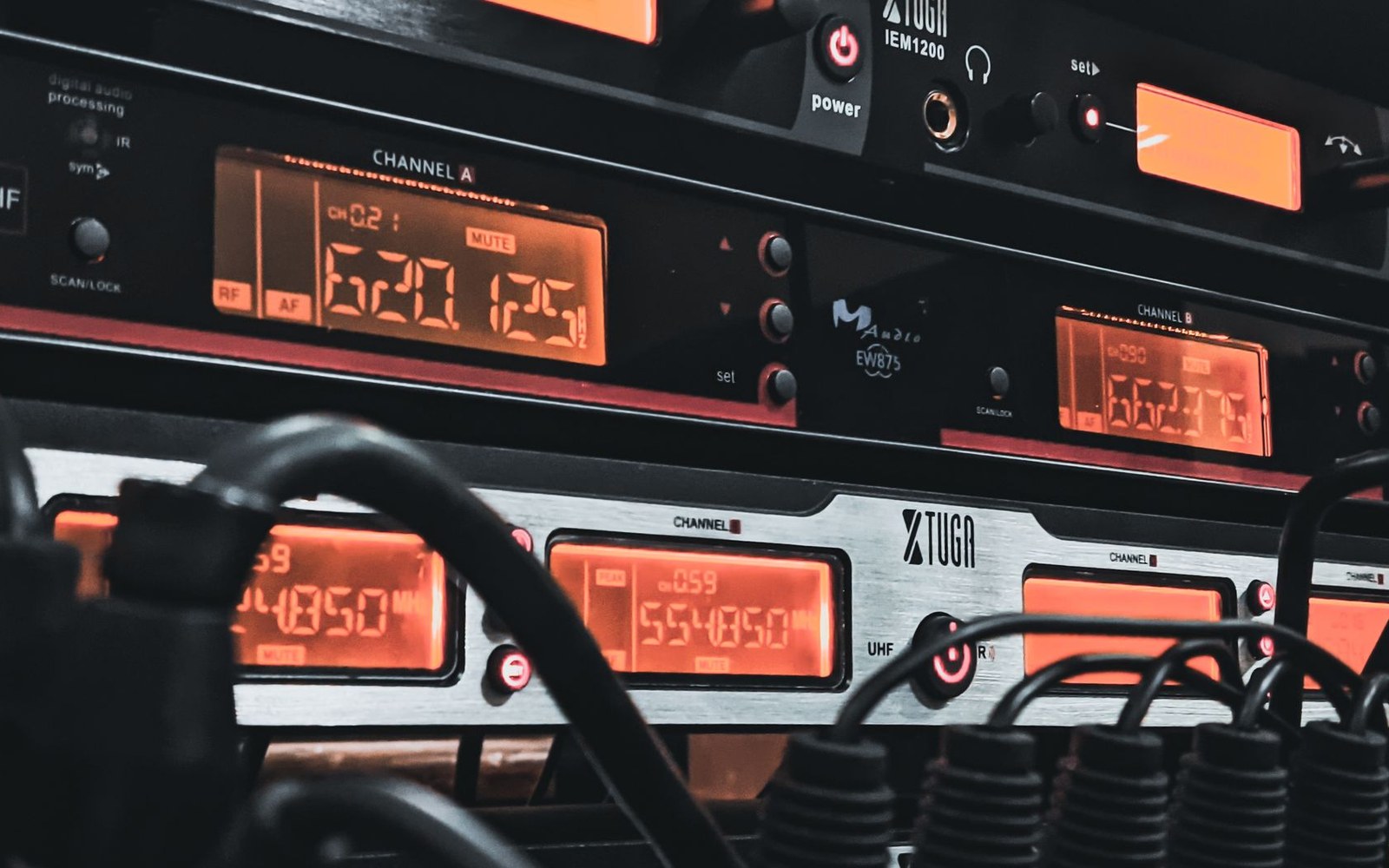
Processing sits between playout and transmission, and it is where loudness policy stops being a document and becomes a setting.
Photo: Busalpa Ernest / PexelsThe Joint Venture That Reduced, But Did Not End, the Friction
For decades, UK stations negotiated and paid two separate licences. In 2018, PRS for Music and PPL established PPL PRS Ltd, a jointly owned company that issues a single licence — the PPL PRS Music Licence — to most business premises and smaller broadcasters. The invoice is one; the underlying split still exists beneath it, with PPL PRS distributing each collected pound to whichever society owns the right it corresponds to.
For licensed radio broadcasters proper — commercial stations, community licensees, and the BBC under its own framework — the picture is more complex. Tariffs for broadcast use are set separately by each body, and larger operators typically maintain distinct relationships with both. Ofcom's published community radio licence conditions require licensees to hold appropriate music licences, but specify the obligation without resolving which body issues what.
The Cost Is Administrative as Much as Financial
The structural consequence is real overhead. Every new station must identify the correct tariff band for both PRS for Music and PPL, report airplay to two schedules, and — for online simulcasting — navigate whether streaming rights are included in the broadcast licence or require separate negotiation. The PPL PRS joint venture was a genuine simplification for smaller operators, but it did not collapse the underlying rights framework. The two rights remain legally distinct, the two collecting societies remain legally separate, and every song played on UK radio remains, in copyright terms, two transactions at once.
More in The Money