The Switchovers
Where FM Is Not Going Away
Switching off FM is a policy choice. So is deciding not to.
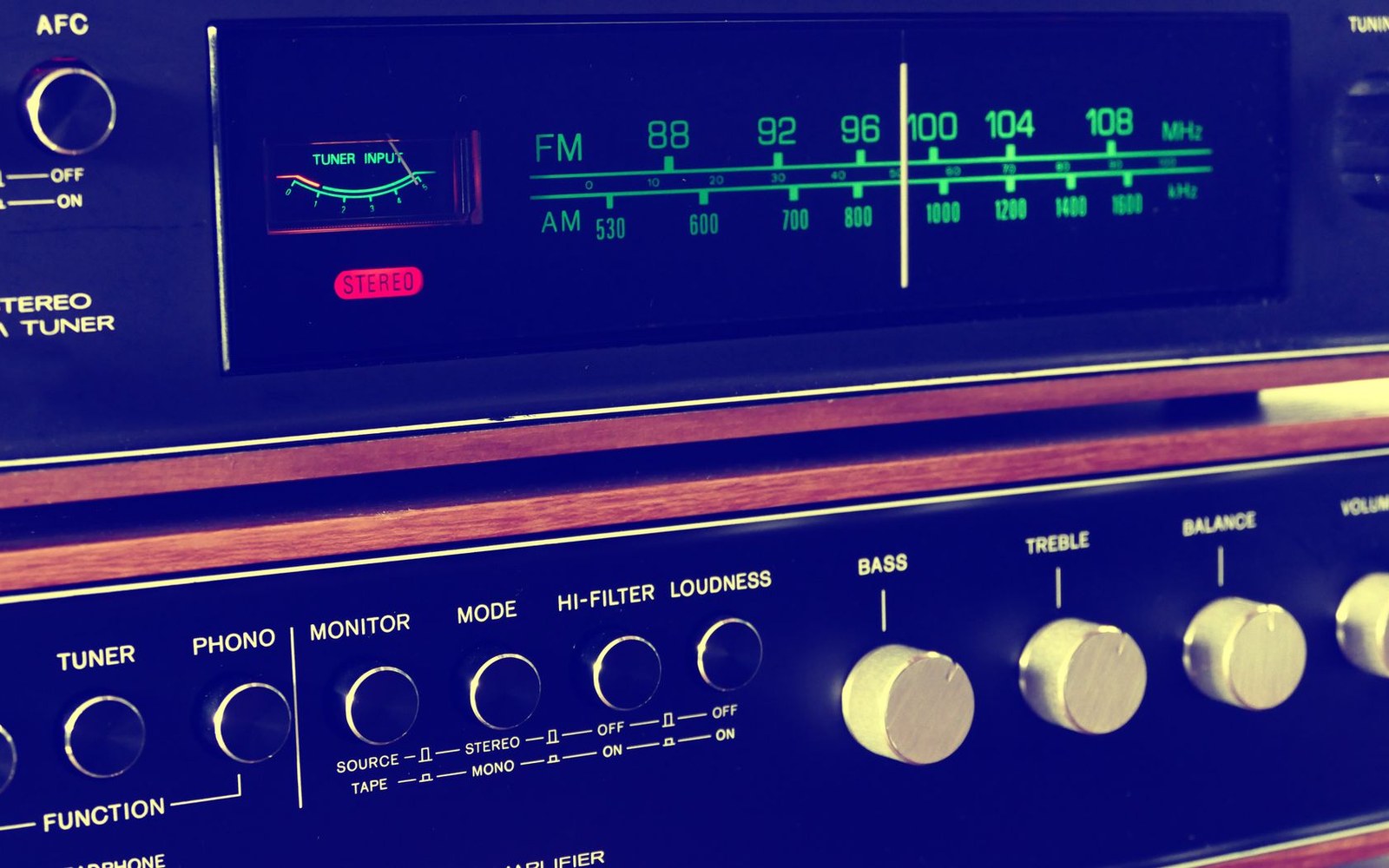
The angle is political economy: the decision not to switch off is as deliberate as the decision to switch.
Photo: Anthony 🙂 / PexelsThe Decision to Stand Pat
Norway completed its national FM shutdown in 2017, and Switzerland closed its own analogue chapter in 2024. Those milestones are well documented. Less examined is the equally deliberate architecture of inaction that governs FM in the United States, France, and a broad arc of southern and eastern European states — countries where regulators and legislatures have reviewed the question and, through formal or functional means, answered it with a firm no, or something close enough to matter.
In the United States, no federal timetable for FM shutdown has ever been proposed in legislation or by the FCC. The agency's digital radio strategy rests entirely on HD Radio, the in-band on-channel system licensed by iBiquity Digital Corporation, which overlays a digital signal on an existing FM or AM frequency rather than replacing it. The model is explicitly additive: the analogue carrier stays live, and the digital layer rides alongside it. Receiver penetration has grown through voluntary factory installation in newer vehicles, but the FCC has shown no appetite — under administrations of either party — for a switch-off proceeding. The National Association of Broadcasters has consistently opposed one, and Congress has not moved to override that position. FM in the United States is, for practical purposes, a permanent fixture of the regulatory landscape.

Master control is where a switch-off is executed: programme feeds, transmitter status and helpline traffic are read from one desk.
Photo: Caleb Oquendo / PexelsFrance presents a different political logic but a similar outcome. French commercial radio is densely built around FM. The Autorité de régulation de la communication audiovisuelle et numérique, known as ARCOM (successor to the CSA), has overseen incremental DAB+ rollout in major metropolitan areas, but no switch-off date has been legislated. The French government has repeatedly declined to set one, citing both the cost of receiver replacement for listeners and the fragmented multiplex geography that would leave rural and smaller urban areas without comparable digital coverage. France's public broadcaster, Radio France, has participated in DAB+ trials, but the political will to compel a hard transition has not materialised.
Southern and Eastern Europe Hold the Line
Across southern Europe, the pattern is consistent. Italy has expanded DAB+ coverage and mandated DAB+ reception in new cars sold since 2020, yet no legislation sets a date for FM closure. Spain's trajectory is similar: DAB+ exists in several regions under licences administered through the framework overseen by RTVE and regional counterparts, but the country has issued no shutdown timetable. Portugal, Greece, and the Balkan states have FM infrastructures still carrying the majority of listening, and none has a credible regulatory process underway to close them.
Eastern Europe adds a further layer. Poland, Romania, the Czech Republic, and Hungary each rely on FM as their primary broadcast distribution channel. Investment in DAB+ in those markets has been limited and in some cases has not progressed beyond trial licences. In Poland, successive licensing rounds for DAB+ multiplexes have moved slowly, and the national regulator has not advanced any mechanism that would lead toward analogue shutdown. The economic reasoning is straightforward: where receiver replacement costs fall disproportionately on lower-income households, and where digital coverage does not yet match the geographic reach of analogue transmitters, the political cost of a shutdown vastly exceeds any benefit a government could credibly claim.
The underlying lesson is that a switch-off requires a convergence of conditions that most countries have not met and are not close to meeting: digital coverage matching or exceeding analogue, a critical mass of receivers in homes and cars, a legislative coalition willing to absorb the disruption, and a broadcast industry prepared to give up the infrastructure it knows. Edison Research survey data consistently shows FM remaining the dominant audio platform in the United States by time spent, a figure that gives neither broadcasters nor regulators any urgency.
Where those conditions are absent, the policy default is continuation. The countries that have not switched off FM have not simply failed to act — they have, through formal regulatory posture and the quieter mechanisms of budget allocation and licensing renewal, made a choice. FM endures not by inertia alone but because someone decided it should.
More in The Switchovers