The Groups
Bauer and Global: How Two Groups Came to Carry Most of UK Commercial Radio
Two conglomerates now account for the majority of UK commercial radio listening. Most of the stations they own were independent businesses within the last two decades.

The angle is consolidation's speed: most of the named stations existed as independent entities within the last twenty years.
Photo: Emley Moor Transmitter Mast at night · Wikimedia CommonsFrom Cottage Industry to Duopoly
UK commercial radio arrived in 1973 with the launch of LBC and Capital Radio as the first two Independent Local Radio licences. For roughly three decades the sector remained fragmented — dozens of regional and local licensees, several mid-sized groups, and no single company owning more than a fraction of the total audience. Consolidation was legal in principle but constrained in practice by Ofcom's ownership rules, which limited the number of licences any one company could hold in a given area.
The rules changed. The Communications Act 2003 relaxed local radio ownership restrictions and allowed groups to hold multiple licences across the same transmission area for the first time. What followed was fifteen years of rapid acquisition that left the market shaped by two groups above all others.
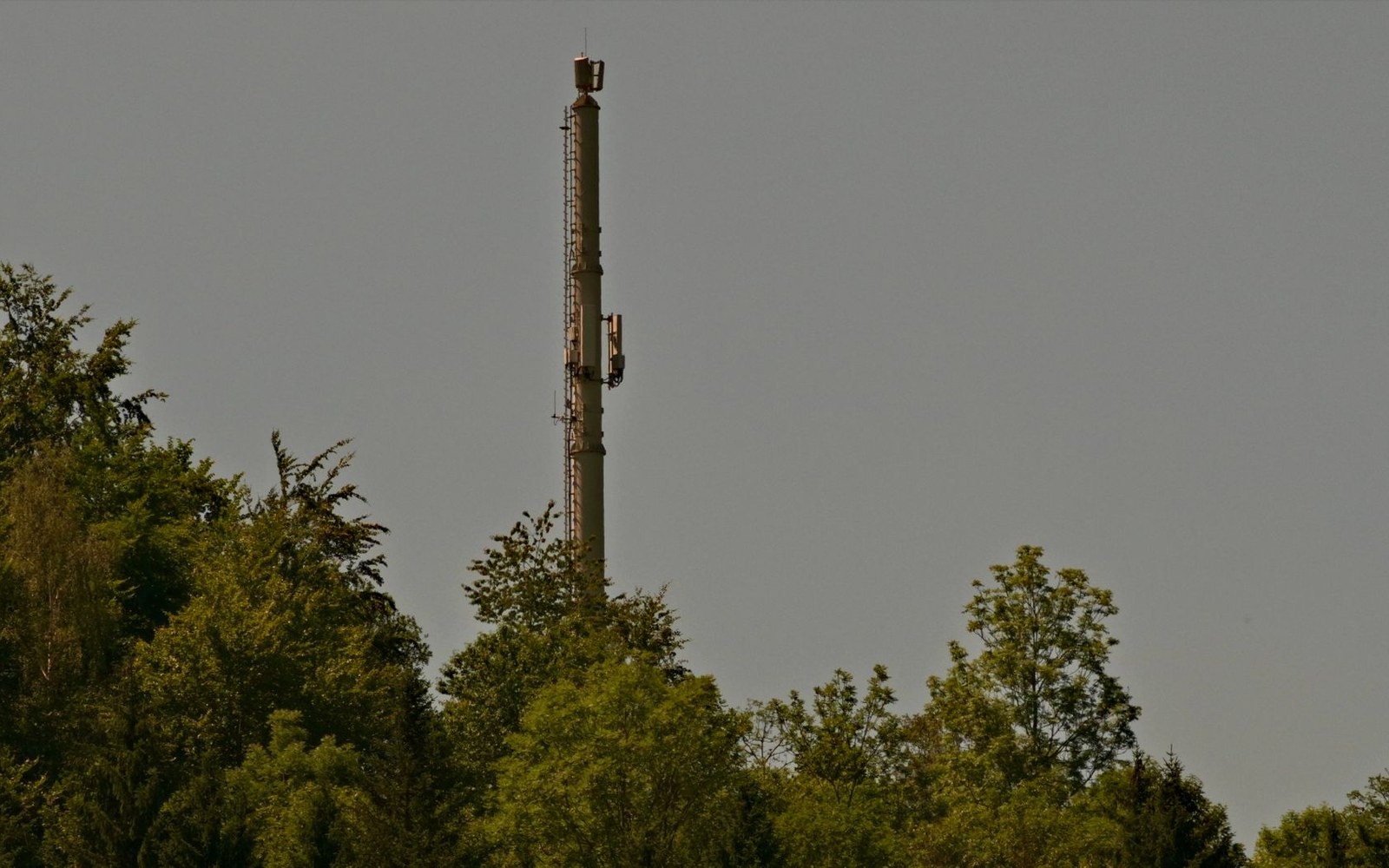
A lattice mast is a shared structure. Ending one transmission on it does not release the site or the obligations attached to it.
Photo: Patrick / PexelsGlobal — founded in 2007 by Ashley Tabor-King — assembled its portfolio through a sequence of landmark deals. It acquired Classic FM along with the GCap estate, then bought Chrysalis Radio in 2012 to add Heart and Galaxy. The Capital brand came with the GCap inheritance, while LBC arrived with Chrysalis and were subsequently expanded into nationwide networks. By the early 2020s, Ofcom's annual communications market reports recorded Global as the largest commercial radio group by audience share, with Capital, Heart, LBC, Classic FM, and Radio X among its flagship services.
Bauer Media, the UK arm of the Hamburg-based Bauer Media Group, followed a parallel but distinct path. Its radio expansion in the United Kingdom accelerated sharply in 2019 when it completed the acquisition of Wireless Group's local radio stations in England and Wales from News UK — before completing a second major purchase that same year: the Celador Radio portfolio. More consequentially, Bauer acquired Absolute Radio from the Times of India Group in 2013, and KISS and Magic from Emap in 2008, consolidating what had been competing independent brands under a single ownership structure. The Competition and Markets Authority reviewed several of these transactions, and its published merger decisions document the progression of market concentration that each deal represented.
Speed Is the Story
What makes the consolidation striking is not the outcome in isolation but the pace at which it occurred. Absolute Radio, which launched under the name Virgin Radio UK in 1993, changed ownership multiple times before settling with Bauer. KISS FM was an independent pirate-turned-licensed station before Emap acquired it; Magic launched in London in 1994 as a standalone commercial licence. Classic FM, which began broadcasting in 1992 as the UK's first national commercial station, spent its first decade outside any major group structure. LBC operated for years under separate ownership before becoming a Global property.
The RAJAR quarterly listening data — published by Radio Joint Audience Research, the industry body that measures UK radio audiences — shows the commercial sector's audience now concentrated heavily in these two groups, with the remainder spread across a long tail of smaller operators and community licensees. Bauer and Global together account for a substantial majority of total commercial radio hours listened to each week.
For Ofcom, which monitors broadcast ownership plurality under the Communications Act2003, the duopoly raises ongoing questions about local output and editorial diversity that the ownership rules were originally designed to protect. Both groups have reduced locally produced programming on many of their licences, a development that generated formal Ofcom scrutiny and, in some cases, format-condition reviews. The national networking of what began as geographically distinct licences — Heart running largely the same schedule from Inverness to Cornwall, Capital similarly uniform — represents the commercial logic of scale applied to a licensing framework that was not designed with that scale in mind.
Whether the framework adapts, or whether it continues to accommodate a structure it did not anticipate, is among the live questions in UK broadcast policy.
More in The Groups